
About Metuge
Metuge District is located in northern Mozambique’s Cabo Delgado Province, near Pemba Bay. The coastline is rich in marine biodiversity, including coral reefs and mangroves, and it supports primarily small-scale artisanal fishing communities.
Livelihoods in the district rely heavily on fishing and an emerging seaweed farming economy, a growing activity that can strengthen income opportunities for women and youth. Metuge’s proximity to the ecologically significant Quirimbas Archipelago UNESCO Biosphere Reserve further elevates its regional importance, even as offshore natural gas developments attract increasing attention.

Specific Challenges
The Metuge Seascape is under severe environmental and socio-economic pressure. Cyclones and other climate-related disasters can destroy homes and community infrastructure, while repeated damage to mangroves and coral reefs weakens natural protection and biodiversity. Flooding and salinization also reduce agricultural productivity, tightening constraints on food and income.
Conflict and displacement linked to the Cabo Delgado crisis have had major social and economic impacts, disrupting daily livelihoods and placing additional strain on host communities. Ongoing instability can limit market access for local producers and fishers, reducing reliable income and weakening supply chains.
Infrastructure gaps and inequality compound these challenges. Limited access to reliable water sources affects irrigation and daily household needs, holding back both agriculture and community wellbeing. Women and youth may face lower financial literacy, limited participation in higher-value opportunities, and weak access to financing—barriers that restrict enterprise growth and resilience.
OceanHub Africa Activities in the Region (Blue Economy Incubation)
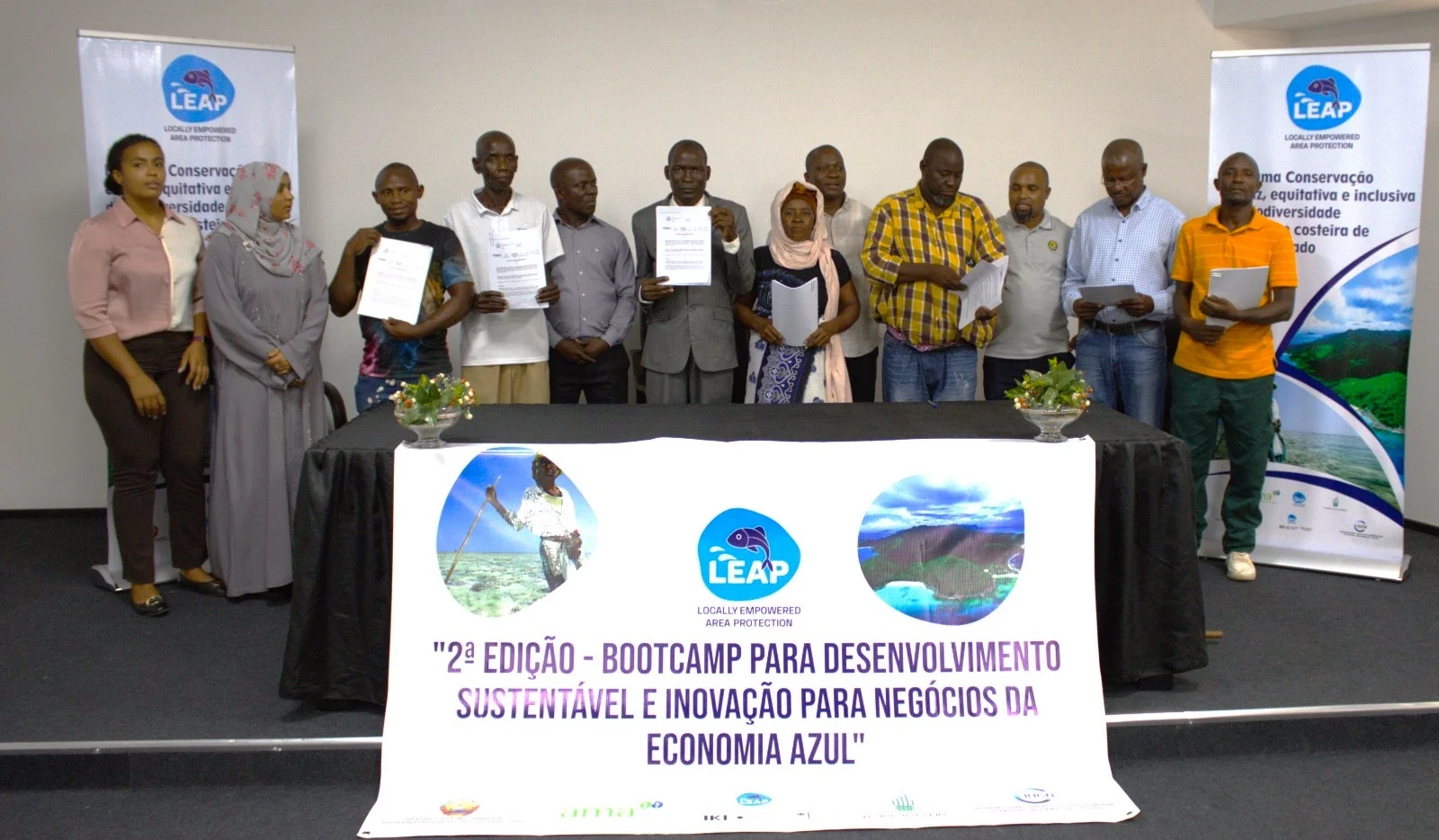
OceanHub Africa supports community-based enterprises in Metuge, including Nankaramo Agro-Pecuaria Mieze (horticulture) and Muhajrina Fishery (small-scale fishing), with a focus on building capacity and enabling sustainable, livelihood-strengthening infrastructure.
This work includes supporting investment in sustainable irrigation systems—such as solar panels, motor pumps, and boreholes—alongside training that strengthens business operations, financial management, and compliance with fishing regulations. It also supports market and product development by expanding fishing capacity and building stronger sales networks for locally produced goods.
