
About Rumaki
Rumaki—short for Rufiji–Mafia–Kilwa—is a large, critical seascape in Tanzania that encompasses the Rufiji Delta, Mafia Island, and the Kilwa coastline. It is a major conservation focus area in East Africa, spanning roughly 1,420 km of coastline and marine waters and supporting more than 8 million Tanzanians.
The seascape includes around half of Tanzania’s carbon-rich mangrove forests along the Rufiji River delta, alongside vital coral reefs and productive fishing grounds. Mafia Island is home to the Mafia Island Marine Park (MIMP), and coastal communities throughout Rumaki depend deeply on these ecosystems for livelihoods such as traditional fishing, small-scale aquaculture, and seaweed farming. The region is also shaped by grassroots governance models, including Community-Managed Fisheries Zones (CFMAs), such as Nyamanjisopoja.

Specific Challenges
The Rumaki Seascape faces three interconnected challenges that shape both biodiversity outcomes and household resilience. Conservation and livelihood programmes remain heavily dependent on external donor funding, and there are gaps in durable, self-sustaining financing systems that can consistently invest in ecosystem protection alongside long-term community development.
At the same time, environmental pressure and habitat degradation continue to threaten core assets—mangrove forests, coral reefs, and fishing grounds. As habitat loss and ecological stress increase, the natural resources that communities rely on become less predictable, which intensifies vulnerability in places where alternatives are limited.
Poverty and economic vulnerability further compound these pressures. Coastal households often depend on natural resources for day-to-day survival, with limited livelihood diversification, while constrained access to higher-value markets reduces earning potential and leaves communities more exposed to environmental or market shocks.
OceanHub Africa Activities in the Region (Blue Economy Incubation)
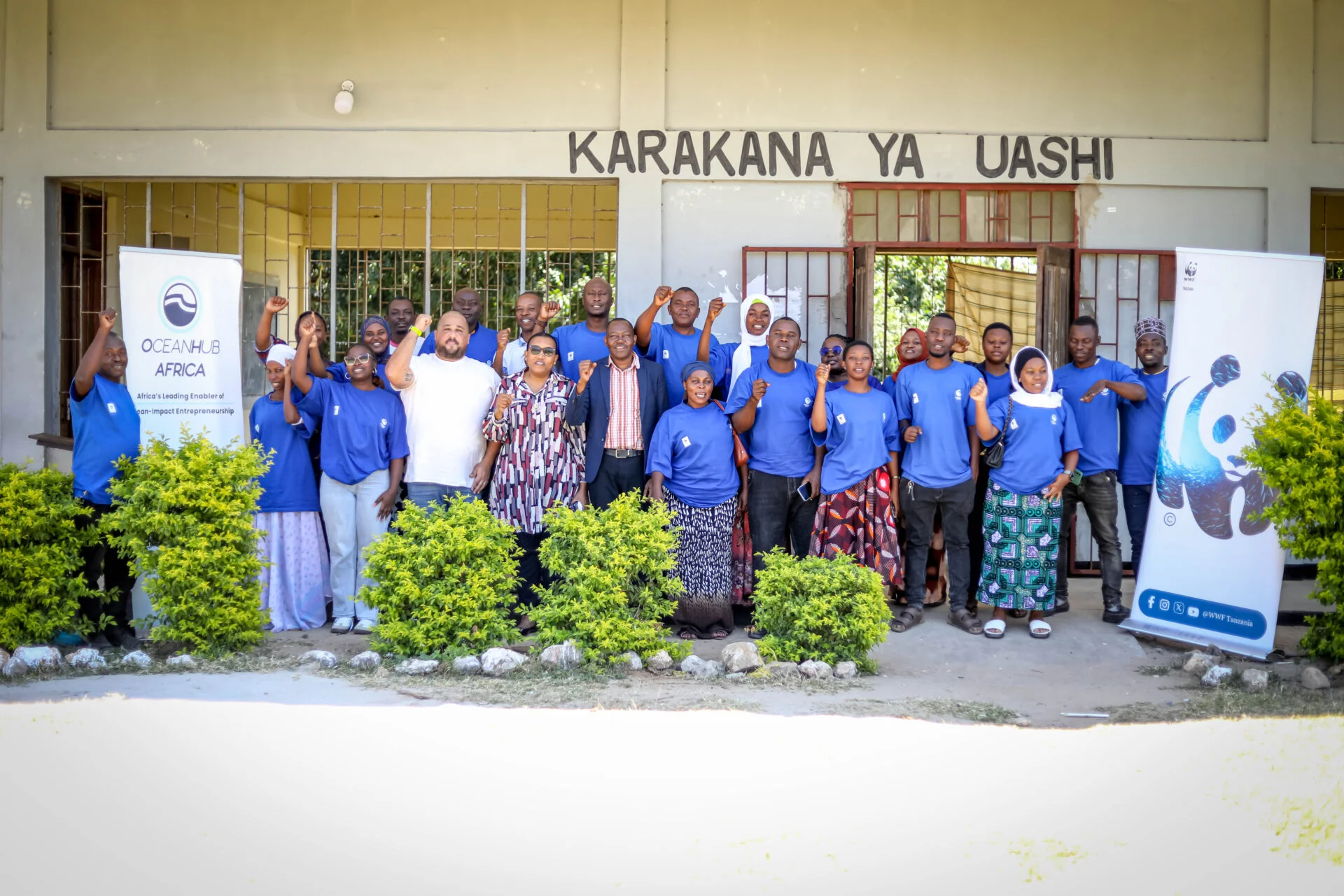
OceanHub Africa’s intervention focuses on strengthening local capacity and supporting sustainable blue economy enterprises that address poverty, environmental degradation, and financial dependency. This includes training for groups such as the Coastal Women Foundation (COWOFO) to strengthen governance, value addition (including seaweed processing), and financial management.
Support also extends to practical enterprise needs, including equipment and facilities that enable safer processing and better protection of resources and products. OceanHub Africa also supports greater financial inclusion by helping individual businesses set up bank accounts for transactions and participate in local savings groups, and it facilitates improved access to marine resources and sustainable aquaculture development, including initiatives such as crab and sea cucumber farming.
