
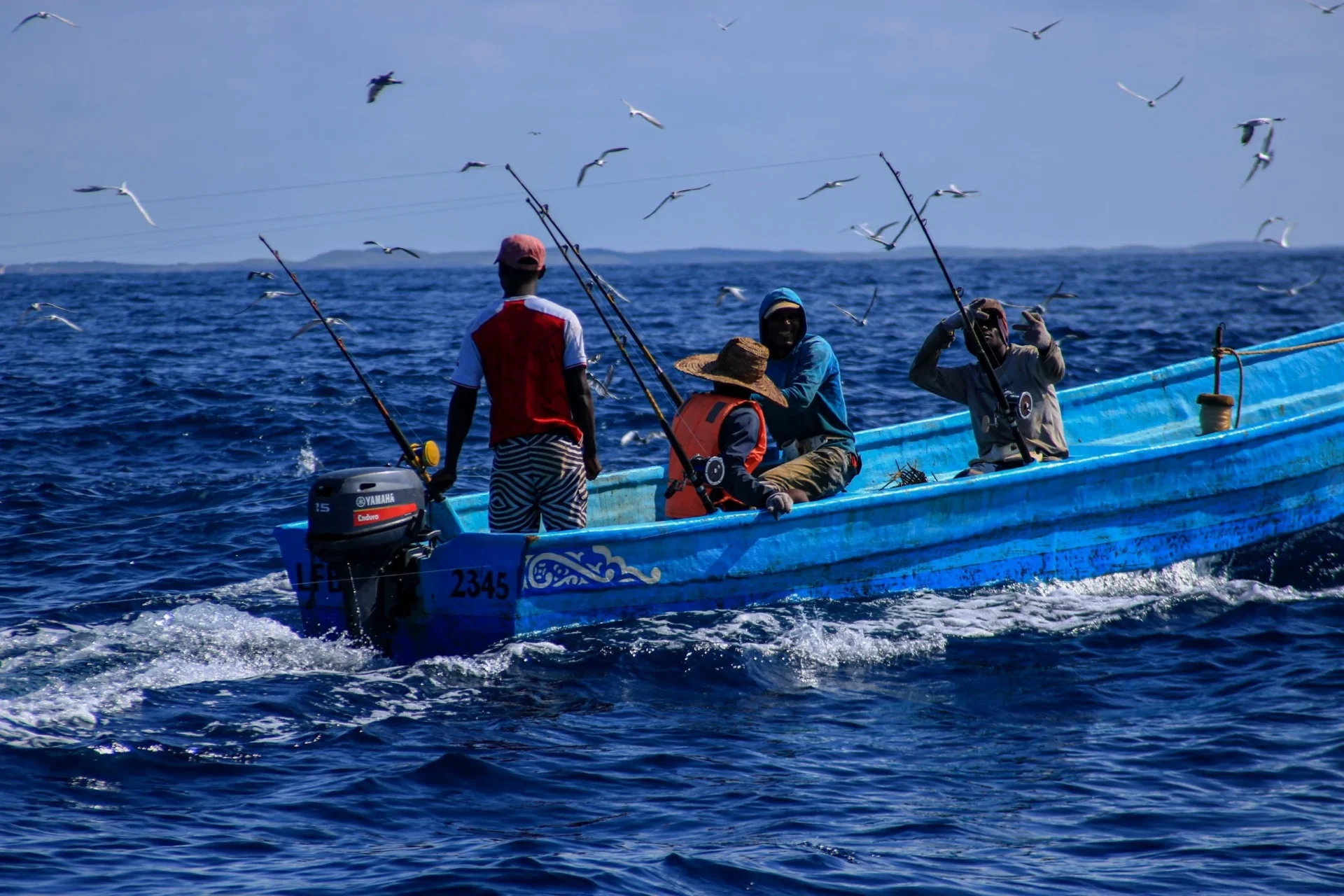
From Survival to Stewardship: How 357 Fishers are Reclaiming the Swahili Coast
For fishers like Abdul Athman Bakari, the stakes are not abstract. With post-harvest losses at 55% and coastal poverty exceeding 60%, the “Blue Economy” can feel like a slogan that never reaches the shoreline. Kumbatia Seafood entered OceanHub Africa’s 2022 cohort with a clear goal: change the incentives so that sustainable fishing is not a sacrifice. It is the pathway to stability.
OceanHub Africa’s role was to help turn that vision into something that could scale. Through acceleration support, we provided the commercial engineering and technical mentorship needed to strengthen Kumbatia’s model, refine an off-grid cold chain, and align their training, financing, and logistics approach with international standards. That work helped bridge the distance between remote Kenyan fishing communities and premium global markets, so value could flow back to the coast rather than leaking out through waste, weak pricing power, and exploitative middle-market dynamics.
Today, Abdul is part of a 357-strong network across eight communities, where sustainable practices are no longer framed as “doing the right thing at your own expense.” They are increasingly understood as the foundation for better earnings, stronger stewardship, and pride in protecting the Swahili Coast.
Results
- Reach: 357 fishers engaged across 8 communities.
- Income: 110% increase in annual household income tied to improved market access and reduced losses.
- Gear Financing: KES 2.1 million+ financed for sustainable fishing gear, reducing reliance on destructive nets.
- Regional Growth: Expansion into Zanzibar, extending the model beyond the Kenyan coast.
- Waste Reduction: 89 tonnes of seafood waste reduced (2025).
- Climate Resilience: 150 people supported to adapt to climate change.
- Total Turnover: $844,938.52 generated since 2022.
This is market-based conservation in action. When the cold chain works, when financing supports sustainable gear, and when markets reward traceability and quality, protecting the Swahili Coast becomes the more profitable option, not the more painful one. And that is the kind of system change that lasts: a cycle where higher-value trade helps fund ocean health and the dignity of the people who depend on it.


